
Election season is always chaotic, and as we hit another major US election in the era of social media, this year hasn’t been much different.
In an ongoing effort to curb misinformation and last-minute election interference, Meta is bringing back a familiar restriction: a strict political ad blackout period from October 27 through November 3, 2026.
If your brand or organization touches anything remotely adjacent to social issues, elections, or politics, the timing of your campaigns may be affected. Don’t panic, though: we’ve put together a breakdown of what the blackout entails, why the automated filters are so tricky, and how to keep your messaging alive when Meta flips the switch.
Quick Recap: The Never-Ending Blackout of 2020
If you were running ads during the 2020 election cycle, the phrase “blackout period” probably brought back some anxious memories.
Meta (then Facebook) first introduced the pre-election ad restriction in late 2020. The original premise was exactly what it is today: a temporary, one-week freeze on new political ads just before Election Day, to prevent late-stage misinformation that couldn’t be fact-checked in time. However, things didn’t go according to plan.
Due to the contested nature of the election results and the subsequent runoff elections in Georgia, Meta extended the blackout. Then extended it again.
What was supposed to be a brief pause turned into a grueling, multi-month freeze that lasted well into January 2021. Thousands of advertisers (many of whom weren’t even political entities) were left completely in the dark, unable to launch vital end-of-year campaigns.
While we hope Meta sticks to the strict November 3 end date this year, the lesson from 2020 remains clear: never leave your entire ad strategy at the mercy of a single platform’s timeline.
The Filter Problem: What Actually Counts as “Political”?
During this blackout window, Meta will reject any new ads categorized as political, electoral, or related to social issues. But what exactly defines a “social issue”?
Meta’s definition casts a wide net, purposefully to cover themselves from potential liability. According to their policies, ads about civil and social rights, the economy, environmental politics, health, immigration, and education can all trigger the political filter. This is where advertisers run into massive headaches. Meta relies heavily on automated, AI-driven filters to police these categories. These bots are looking for keywords, not context. This means false positives are incredibly common, and extremely frustrating to deal with.
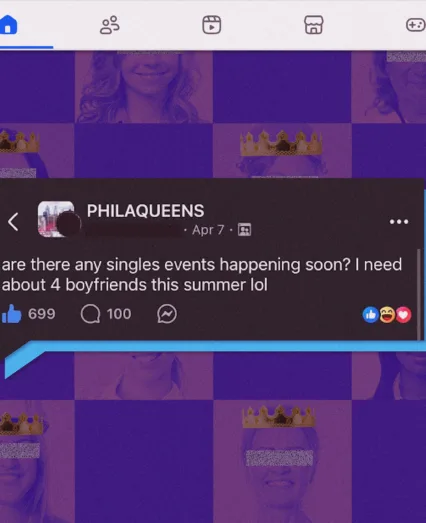
Bots have been known to flag anything that mentions a politician, the word ‘vote,’ and even innocuous content from nonprofits that received government grants. If your ad gets mistakenly flagged by an overzealous bot during the blackout period, you won’t be able to rely on a human review to save you in time. Meta support is mostly bots, too, if this is the case.
The 2026 Rules & The Grandfather Clause
There is a silver lining to all of this: the restriction only applies to new ads.
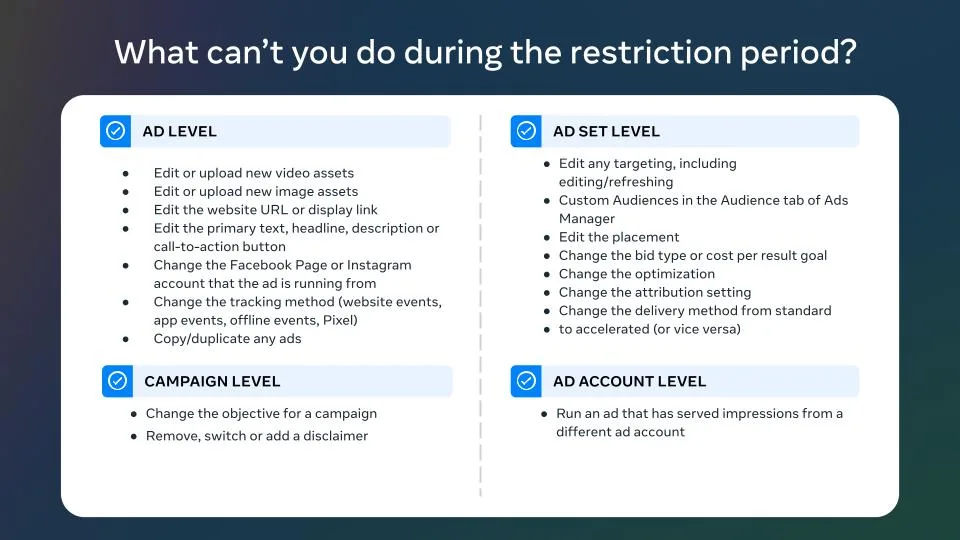
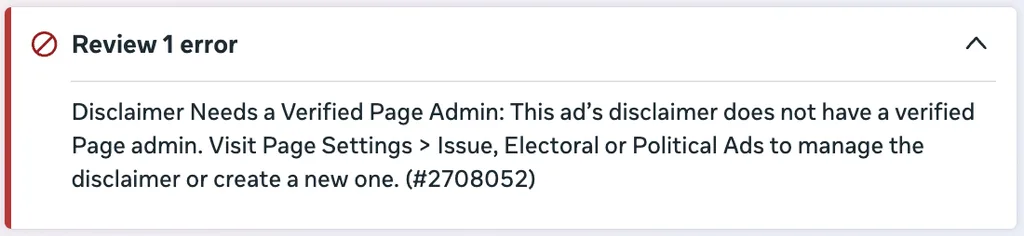
If you have an existing, approved ad that started running by Monday, October 26, it is cleared to continue delivering straight through the blackout period. Ads that are currently active should be good to go, but whatever you do, do not edit them. Tweaking the copy, swapping an image, adjusting the budget, or changing the targeting after the October 26 deadline will trigger a re-review. Once that happens, your ad will be caught in the blackout net and locked out until after November 3.
The Pivot: Escaping the Walled Garden
While Meta can feel like the behemoth you need to advertise on, people can be reached on many platforms, in many different ways, with similar impact. If you have a campaign that’s affected by this lockout, we highly recommend pivoting those resources toward programmatic channels:
- Connected TV (CTV): Reach voters and consumers in their living rooms alongside premium streaming content, like Disney+, Hulu, HBO Max, and more.
- YouTube: Highly targeted video placements that don’t suffer from Meta’s specific blackout rules, with all the benefits of the world’s second-most popular search engine.
- Digital Audio (Spotify, podcasts): An intimate, highly engaged medium perfect for nuanced messaging.
- Programmatic Display: Keep your brand visible across thousands of high-quality websites, aiming for massive, scalable awareness.
These channels offer robust audience targeting without the unpredictable red tape of Meta’s social issue filters. Your creative doesn’t have to suffer, either. Display ads can often be adapted from existing social assets, while YouTube and Connected TV allow you to repurpose video content for broader reach.
These changes are frustrating, but they can be managed with careful planning. If you’re worried about getting caught in the blackout, or you need help spinning up a last-minute programmatic campaign to diversify your media mix, tap our team in. We’re here to help you navigate the noise.