

Platforms love to roll out updates that quietly strip away the levers and dials we use to control our campaigns, then frame them as helpful automations. Gee, thanks!
Meta’s latest update is a perfect example, which is a push toward more algorithmic delivery (think along the lines of Google’s Performance Max), and will fundamentally change how advertisers can control where their ads show up.
While it’s a frustrating development, it’s not unmanageable. Here is exactly what’s changing on Meta’s ad platform, how it will impact your data, and the strategic pivots advertisers will need to make to keep campaigns performing.
What are Meta’s new ad placement changes?
To make a long story short: Meta is removing the ability to strictly limit ad delivery to a specific channel or placement for certain campaign objectives.
If you are running ads optimized for Engagements, Leads, or Sales (Conversions), here is what you need to know:
- The 10% Cross-Platform “Leak”: You can no longer force an ad to run exclusively on Facebook or exclusively on Instagram if you’re using one of the above objectives. If you submit an ad meant only for Instagram, Meta will now force a minimum 10% of impressions over to Facebook (and vice versa), depending on how you set your ‘placement value’ rules.
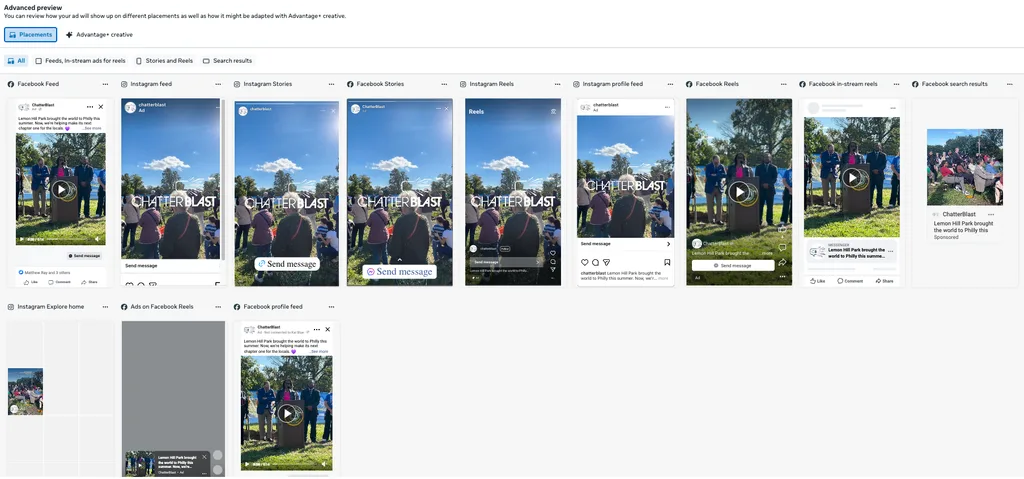
- Creative Placement Anarchy: We can no longer restrict delivery solely to the Feed just because we don’t have Stories/Reels-compliant creative. So if you boost a static, square image, Meta is going to deliver it as a square on Reels and Stories anyway.
- The Temporary Loophole: As of right now, ads set up for Website Traffic are not affected by this change. You can still strictly control placements there.
Why this matters (and why it’s annoying)
Ultimately, less flexibility usually leads to worse actual performance if you aren’t careful.
Many brands rely on platform-specific creatives on their pages. A lot of advertisers also lean heavily on single-sized static images or standard 16:9 videos. While these look fantastic in the Facebook or Instagram Feed, they look completely out of place on vertical-first placements like Stories and Reels.
Beyond aesthetics, there’s a context problem. People don’t interact with (like, comment, or share) Stories and Reels ads the same way they do in the Feed. Additionally, the text you write above a Feed post doesn’t translate properly to Reels and Stories. If your image lacks context without that caption, your performance is going to suffer when the algorithm inevitably forces it into a vertical video slot.
Then, there’s the data side.
Because we can no longer strictly control channel delivery, your engagement rates and overall impressions will likely go up. Sounds good, right? But before you celebrate, keep in mind: this will mostly be driven by cheaper inventory on Facebook.
Instagram has steadily become the more expensive, higher-quality channel, and Meta’s algorithm will naturally gravitate toward the cheaper Facebook impressions to inflate your top-line metrics and put money back in their pockets (mainly to offset the legal settlements from August 2026 and October 2026. These settlements account for between 17-25% of Meta’s total revenue for a year, and while it’s likely to be spread across many years, they’re not going to wait to be able to make that money back).
The path forward: How we adapt
While we can’t stop Meta from tweaking its machinery, we can navigate the changes through careful strategy. Moving forward, a few tactical adjustments are non-negotiable:
1. Less Reliance on the Boost—Build Off-Page
For brands that live on boosting on-page posts, it’s time to rethink the approach. To ensure proper delivery of a message, it is now much more appropriate to build off-page (dark) ads. This allows us to upload multiple creative sizes (square for Feed, vertical for Stories/Reels) to a single ad, ensuring the platform serves a native-looking asset regardless of where the impression lands.
2. Bake the Message Into the Creative
We can no longer rely on post copy or headlines to do the heavy lifting. Creative teams need to design images and videos that convey the core message directly within the content itself. If an ad is served on Reels without its accompanying caption, the user still needs to know exactly what a brand is selling or saying.
3. Shift Objectives for More Control
If controlling the dynamic of a message is paramount, this might mean running fewer Engagement campaigns and shifting more budget toward Website Traffic. Traffic campaigns currently allow us to retain placement control, pushing consumers directly to a website where they can get the full context of a message. From an analytics perspective, getting consumers to your website where you can move the journey along in your own way will always benefit a business long-term. Keeping them on Meta only serves Meta’s goals, which is why we advise to lean heavily away from On-Facebook Leads ads.
Deep breaths. We’ve got this.
These changes are annoying, but they aren’t the end of the world. We’ll be closely tracking and reporting on the actual impact of this rollout as it takes full effect over the next year.
If you’re feeling uneasy about what this means for your current social strategy, or you just want to talk through how to build better multi-placement creatives, our team is always here. Drop us a line, and we’ll be happy to walk you through the new normal.