
Before the film bros open up their Letterboxd accounts and starting typing their scathing responses, a quick disclaimer on this blog:
This is not a movie review.
It’s a blog about marketing. And in movies, marketing kind of determines whether people care at all, let alone enough to get in the car, drive to the local theater, spend 50+ bucks after tickets and concessions, and then keep their eyes off their beloved little screens and on the big screen for upwards of 2-3 hours. This often happens long before ratings and reviews enter the conversation.
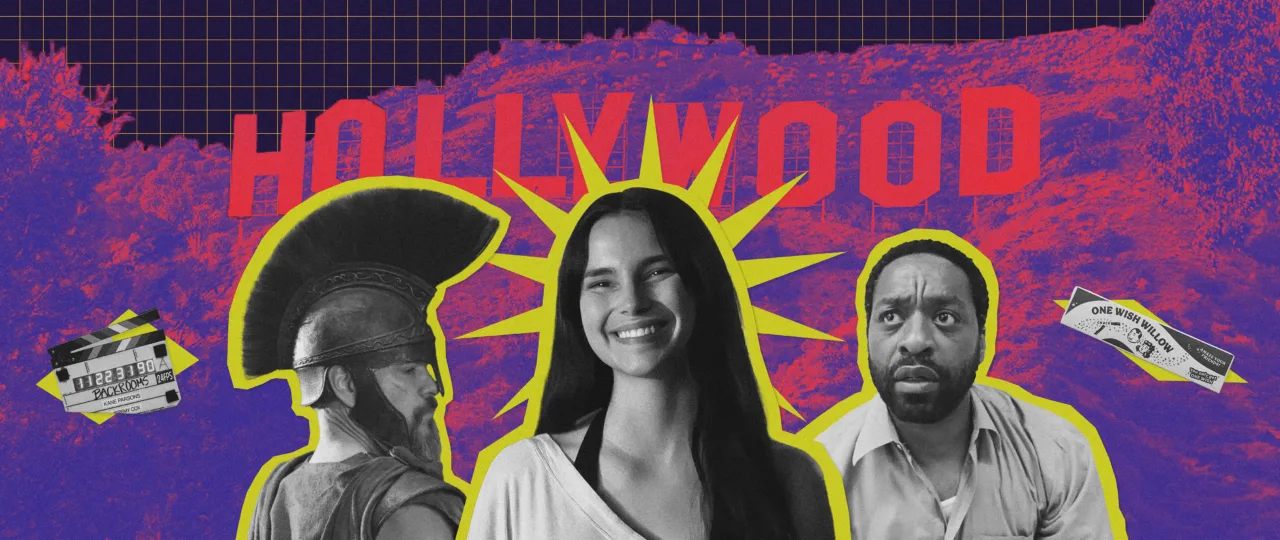
That’s what happened with Backrooms ($330+ million box office on a $10 million budget), Obsession ($400+ million box office on a $750k(!!) budget), and the soon-to-premiere The Odyssey, which has been selling out IMAX pre-sales a year in advance.
These films are not simply winning because they have cool trailers. They’re winning because the teams marketing them understand a simple reality of the current landscape: Attention cannot always be bought. It has to be earned.
People Buy into the Conversation
Movie marketing used to have a more straightforward formula.
Release a trailer. Release another trailer. Put the poster on a billboard. Put the cast on late night to yuk it up with David Letterman for five minutes. Hope for the best.
But today, some of the best campaigns make people feel like they’re discovering something vs. being advertised to. That’s what Backrooms did so well.
Instead of bending over backwards to over-explain the internet lore of the existing web series that the movie was ultimately borne out of to a general audience, A24 aimed its campaigns at audiences already familiar with it. Early campaigns looked like 20 year-old director Kane Parsons’ early YouTube videos. Bleak empty office spaces. Flickering lights. Grainy VHS footage. Zero context.
There was no hand holding or Carpool Karaoke sessions with James Corden. It rewarded loyal fans who were already in on it and it kept things mysterious and interesting for those who would catch up later.
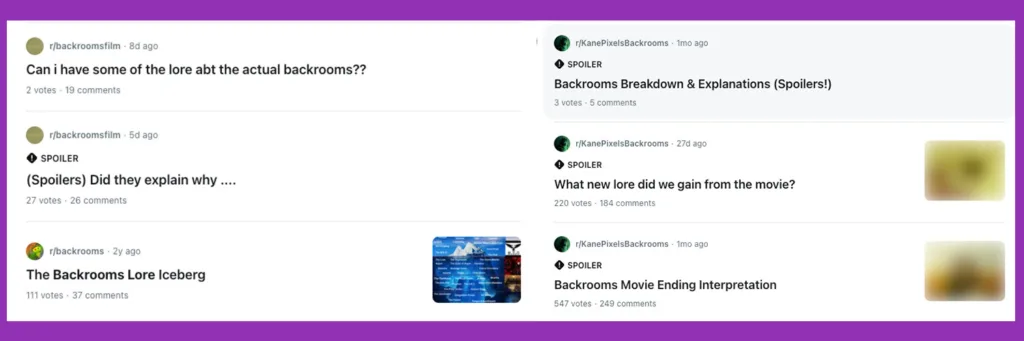
The result of this was a million TikToks, YouTube videos, and Reddit threads doing the explaining for them. Free labor! Earned media! The allure of the movie’s lore and mythology drew in both longtime fans and curious newcomers alike.
Trust is Built Over Time, Not Rented
A big reason that Obsession landed with young horror audiences is because its campaign never really made it feel like it was trying to convince people that first-time 27 year-old director Curry Barker belonged in the spotlight. His audience already decided that years ago. Like the last guy I mentioned: on the internet.
Like Parsons, Barker spent years building an audience online before Hollywood came calling. By the time Obsession was announced, he wasn’t some unknown filmmaker hoping people would take a chance on him. He was a creator whose fans were excited to see what he’d do with a bigger budget. And rather than scrubbing that creator identity away, the marketing embraced it.
Barker remained front and center through Reddit AMAs, podcast appearances, NBCUniversal interviews and the years of YouTube videos that introduced audiences to his filmmaking style in the first place. The campaign didn’t feel like a studio unveiling its next horror director. It felt like the internet watching one of its own get promoted to the majors.
As a result, horror creators and YouTubers didn’t need to be convinced to cover Obsession because many of them had already been following Barker’s work for years and they were celebrating a peer they genuinely wanted to see succeed.
Compare that to the increasingly standard strategy of studios bussing in influencers to an early screening and hoping they to post to their 10k followers on TikTok: “OMG, you guys have to see this movie. It’s soooo scary!”
Trust is built over time. Not rented for a night.
Brands spend billions and zillions of dollars trying to manufacture authenticity when they could instead work harder and smarter to empower the people already telling their story.
Everything is an Event
Then there’s The Odyssey. And in a masterful segue from the last section on Obsession’s marketing, it has recently been reported that Christopher Nolan and Universal have opted out of influencer screenings entirely. This is a move that feels at the very least confident in the product itself and at most incredibly defiant in today’s economy of hype.
But The Odyssey doesn’t need it, because it had already become 2026’s most anticipated movie months before the first behind the scenes photo of 55 year-old Matt Damon looking absolutely shredded on set had leaked to the public.
Jacked Damon was a microcosm of a larger campaign effort by Universal: make everything an event. You’re spending $250 million to make this thing, so you’d better treat it like the next iPhone is about to drop. Everything must be news.
Cast is announced. News.
Nolan is shooting this whole thing on cutting edge cameras. News.
Filming in exotic locations like Greece and Morocco. News.
New IMAX partnership. News.
First-look stills from the film. News.
Matt Damon is ripped as hell. News.
Notice what’s happening? We’ve been hooked on a slow drip IV of The Odyssey for the past two years. And now that it’s almost here, it’s a billion dollars at the box office or bust.
What Can Brands Actually Learn From This?
Okay, so most companies are not marketing summer blockbusters. But it’s not entirely apples to oranges. Many of the same principles still apply:
- Give people something to discover: Curiosity = clicks.
- Make your audience your collaborators: Thinking thoughts like… “What would make someone create content about us without being asked?“
- Every update is an opportunity: Simple announcements don’t have to be reserved for trailers and late night TV.
- Leave room for curiosity: Great campaigns sometimes leave just enough unsaid that people feel compelled to keep looking.
That’s Hollywood magic!